Introduction
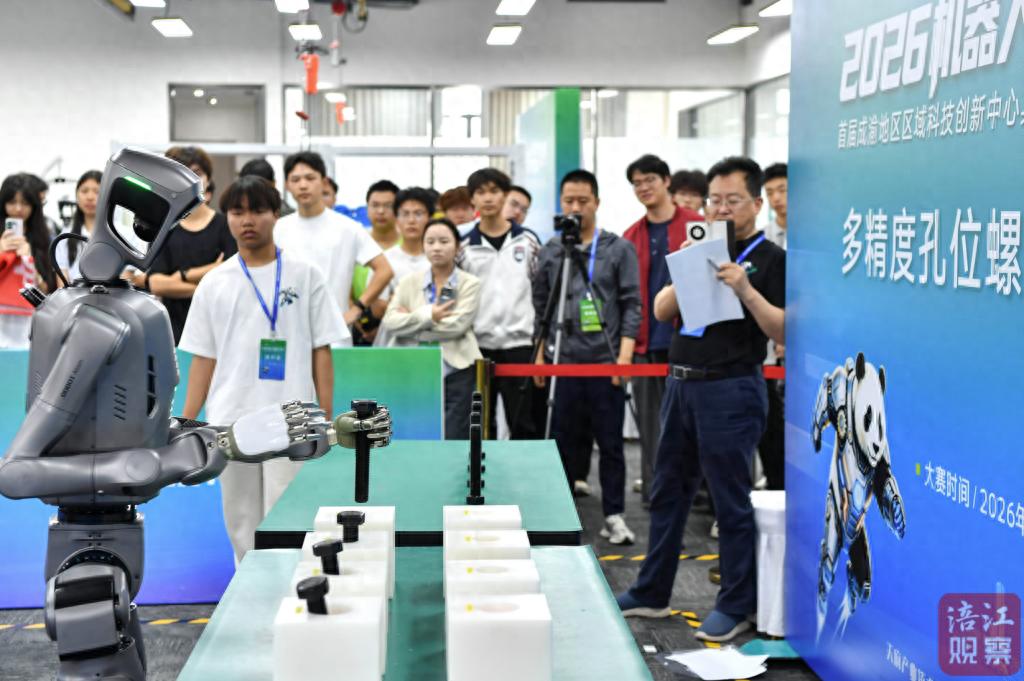
The intelligent guiding robot alerts the visually impaired when it detects a bus station ahead; it accurately identifies and retrieves a red medicine bottle based on instructions; during a precision bolt assembly competition, the robot performs high-precision insertion and extraction operations.
From May 11 to 12, the 2026 Panbao Challenge—the first regional technology innovation center challenge for embodied intelligent robots in the Chengdu-Chongqing area—was held in Mianyang, awarding 3 gold, 6 silver, 9 bronze, and several merit awards.
This challenge is a key part of the first Chengdu-Chongqing regional technology innovation center challenge for embodied intelligent robots, themed “Intelligence Gathering to Ignite New Momentum.”
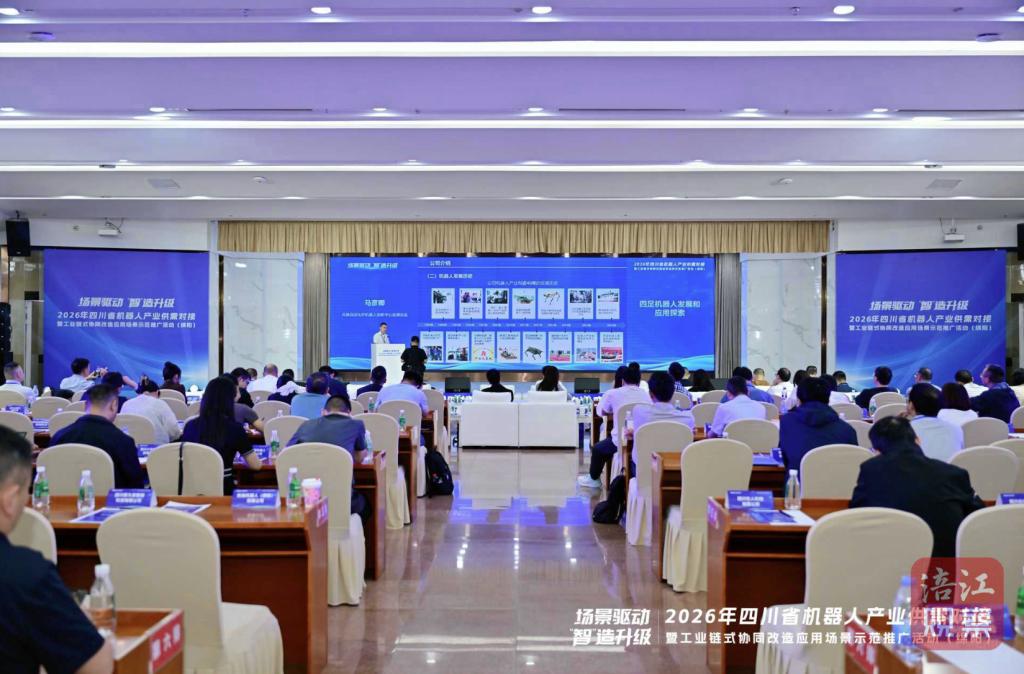
An ecological conference held after the challenge awarded the winning teams and released a list for cultivating artificial intelligence scenarios, followed by the China (Mianyang) Science and Technology City “Silver Enterprise Bridge Meeting” focused on artificial intelligence.
The event and ecological conference formed a cross-regional collaborative innovation industry activity encompassing “competition + ecological co-construction + industrial-financial docking.”
Focus on Three Key Areas
Unlike typical robot performance competitions or closed laboratory tests, all events in this competition were designed based on real industrial scenarios, primarily focusing on three key areas: industrial manufacturing, special operations, and social services. The competition featured six practical events: precision hole assembly, multi-attribute material intelligent sorting and transportation, intelligent control of high-voltage switchgear, intelligent fire reconnaissance, intelligent home care services, and intelligent guiding robots.
These events address real “pain points” in their respective industries. For instance, the precision hole assembly and multi-attribute material sorting events correspond to the challenges of flexible assembly and efficient flow in industrial manufacturing; the intelligent control of high-voltage switchgear and fire reconnaissance events simulate high-risk environments like high-voltage power maintenance and disaster response; and the home care services and intelligent guiding robot events focus on elderly care and the mobility needs of visually impaired individuals.
As a representative from Changhong Intelligent Robotics Company stated, the challenge effectively bridges the gap between research results and industrial application by focusing on real scenarios and key technological breakthroughs.
According to the organizing committee, 30 participating teams registered for 62 events, with robots from leading domestic brands such as Zhiyuan, UBTECH, Yushu, Leju, Tianlian, and Wubai.
This competition is a concrete practice of building the Chengdu-Chongqing regional technology innovation center and demonstrates significant regional collaborative thinking. It was co-hosted by Mianyang Science and Technology City, Sichuan Tianfu New Area, Chongqing Liangjiang New Area, and Chongqing High-tech Zone, integrating into the “3+3” science and technology innovation center system, transforming regional collaborative innovation from agreements into practical competitive platforms. Mianyang, as a critical part of the Chengdu-Chongqing “Innovation Golden Triangle,” aims to strengthen collaboration with Chengdu and Chongqing in the artificial intelligence and robotics industry chain through this event, creating a more prominent industrial and innovation agglomeration effect.
Additionally, the competition adopted a market-oriented model, led by investment institutions and industrialization platforms, with post-competition investment and financing docking emphasizing industrial development orientation. During the ecological conference, Mianyang released a list for cultivating artificial intelligence scenarios, focusing on key areas such as commerce, culture and tourism, people’s livelihood, and transportation, encompassing various models like procurement, leasing, joint investment, and industry-university-research cooperation.
Accelerating AI Industry in Mianyang
Public data shows that Mianyang, the host city of the competition, is China’s only science and technology city, home to 20 national-level defense research institutes and 9 national key laboratories, maintaining a leading R&D funding intensity nationwide. In recent years, Mianyang has prioritized the development of the artificial intelligence and robotics industry chain. By 2025, the city is expected to have gathered 129 AI chain enterprises, with an industry scale of 32.766 billion yuan, a year-on-year growth of 21.57%.
According to the Mianyang Economic Cooperation Bureau, there are currently 80 robot companies in the city, which hosts the only national AI application pilot base in the western region. The special environment operation robot industry cluster has been recognized as a national-level characteristic industry cluster by the Ministry of Industry and Information Technology. In terms of innovation platforms, Mianyang has been approved to build the first provincial-level embodied intelligent robot training ground in the west (the venue for this competition) and a provincial-level humanoid robot manufacturing innovation center, with a total of 36 AI innovation platforms in the city.
Notably, Mianyang achieved a GDP of 460.066 billion yuan in 2025, growing by 6.5%; in the first quarter of 2026, it reached a GDP of 109.78 billion yuan, with a year-on-year growth of 6.3%. Both figures significantly exceed the average growth rates of the national and Sichuan provincial levels during the same period.
The Panbao Challenge can be seen as a practical test of the latest advancements in embodied intelligent technology through competitive scenarios, providing a new platform for collaborative innovation and result transformation in the Chengdu-Chongqing region’s AI industry. From competitive arenas to scenario-based applications, the convergence of innovation chains, industrial chains, financial chains, and talent chains is accelerating in Mianyang. With the release of the scenario cultivation list and ongoing supply-demand matching, a number of competing technological achievements are expected to accelerate their transition to production lines and service scenarios.
Comments
Discussion is powered by Giscus (GitHub Discussions). Add
repo,repoID,category, andcategoryIDunder[params.comments.giscus]inhugo.tomlusing the values from the Giscus setup tool.