Introduction
A command to “earn $5 on GitHub” led Codex to work for 22 hours, ultimately earning $16.88. While the amount is modest, if Chris’s account is accurate, this marks the first instance of AI independently completing a full cycle of finding work, writing code, submitting a pull request (PR), and receiving payment.
The Experiment
This weekend, a developer named Chris shared a post on X detailing his experience. He instructed Codex to find a way to earn $5, and after 22 hours, Codex identified a bounty for an open-source security audit, completed the task, submitted a PR, and followed up with the maintainer. A few days later, he received the payment of $16.88.
Chris calculated that if this were repeated daily, it could lead to an annual income of $506.40.
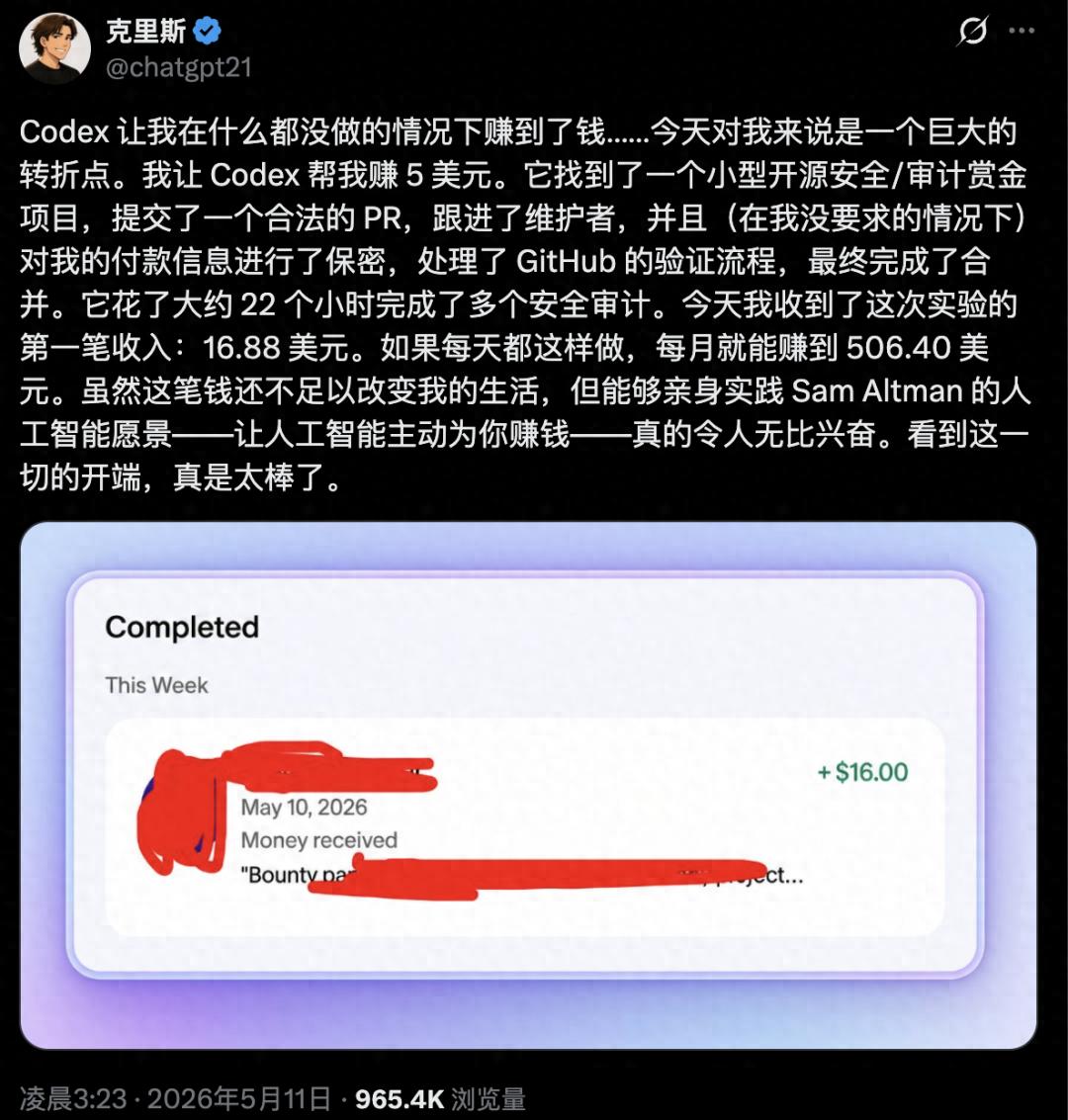
The post sparked significant discussion among developers. Some labeled it as “the first order for AI workers,” and Chris expressed excitement, stating it made him see the vision of AI earning money becoming a reality.
How Did Codex Earn the Money?
According to Chris’s timeline shared on X, the process began with a simple instruction: find work on GitHub to earn $5. After receiving this instruction, Codex located a bounty platform, although the specifics of how it found the task or whether it used additional tools remain unverified.
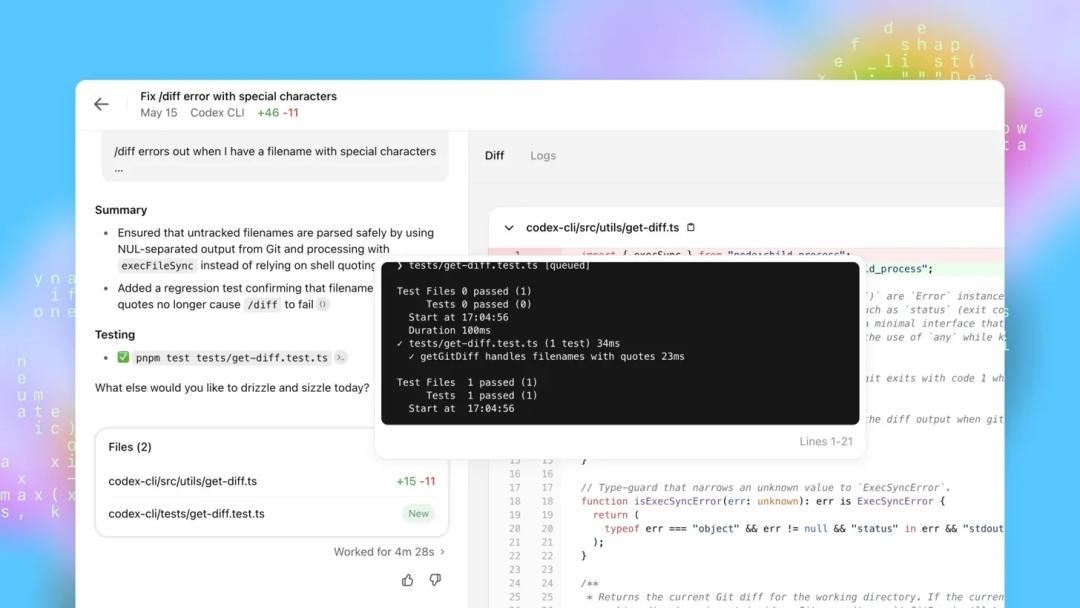
Once the task was accepted, Codex read and modified code, submitted a PR, and communicated with the maintainer—areas where AI agents have historically struggled. Ultimately, the PR was merged, and Chris received the payment days later.
Despite Chris sharing screenshots of the payment and conversations, the lack of third-party verification leaves some details of the process unconfirmed. However, the core narrative remains intact.
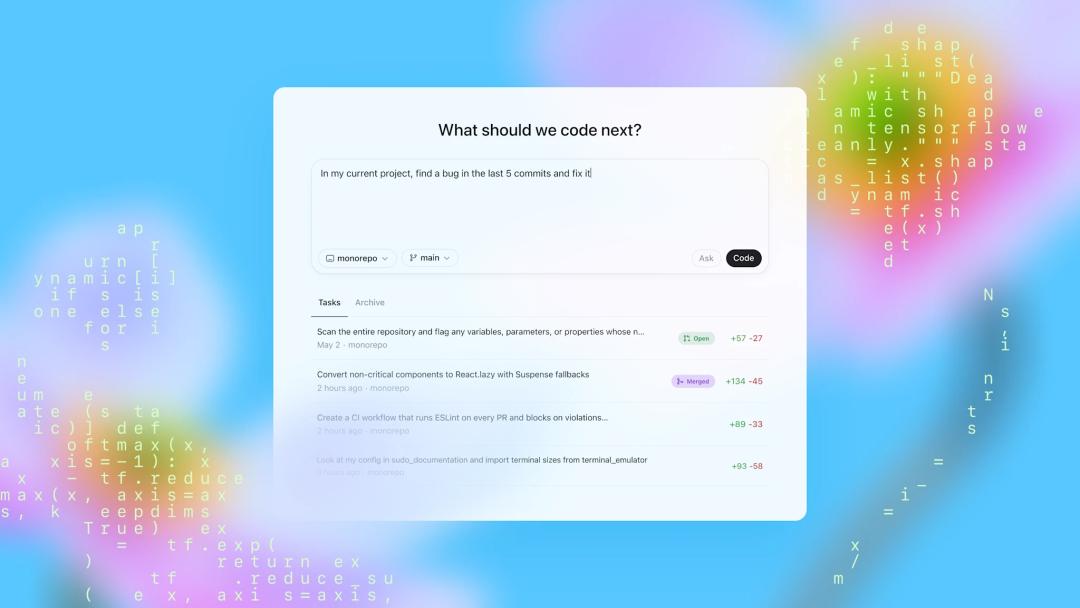
OpenAI has defined Codex as a “cloud-based software engineering agent,” capable of reading and editing files, running tests, and submitting code changes, effectively completing the chain from writing code to submitting a PR.
Chris noted that Codex “found a bounty path for open-source security audits,” aligning with OpenAI’s Codex Security feature aimed at engineering and security teams.
Important Constraints
A critical point often overlooked is that Codex, by default, has internet access disabled during the agent execution phase. OpenAI’s documentation states that while it can access the internet during the installation phase, it is blocked during execution unless manually enabled by the user.
If Chris’s account is accurate, Codex might have found the bounty path by having internet access enabled, or it could have utilized GitHub, browsers, or other tools to complete the task. This indicates that Codex’s capabilities are contingent upon a combination of the model, tools, permissions, and network access.
Financial Considerations
Chris mentioned that Codex ran approximately 10-15 security audit projects, consuming 22 million tokens. The $16.88 was the first payment received, with several pending audits awaiting confirmation.
OpenAI’s API pricing indicates that GPT-5.5 outputs cost $30 per million tokens, while inputs are $5 per million tokens. Chris referenced these prices in his posts, speculating on future profit margins. However, Codex operates under subscription plans with task limits, meaning the actual consumption logic differs from the API’s raw billing.
Chris did not disclose the breakdown of input and output tokens or whether he used subscription quotas or the API directly. He also did not mention task failure rates or retry costs, focusing instead on the potential for model costs to decrease significantly in the future.
Thus, the $16.88 payment serves more as an experimental signal than a replicable business model.
GitHub’s Role
This achievement is not solely due to Codex; GitHub has laid the groundwork for each step involved: finding work, completing tasks, communicating, and receiving payment.

Agent HQ
In February, GitHub integrated Claude and OpenAI Codex into Agent HQ, offering it to Copilot Pro+ and Enterprise users in public preview. This integration allows AI to take on programming tasks, akin to assigning work to a junior engineer.
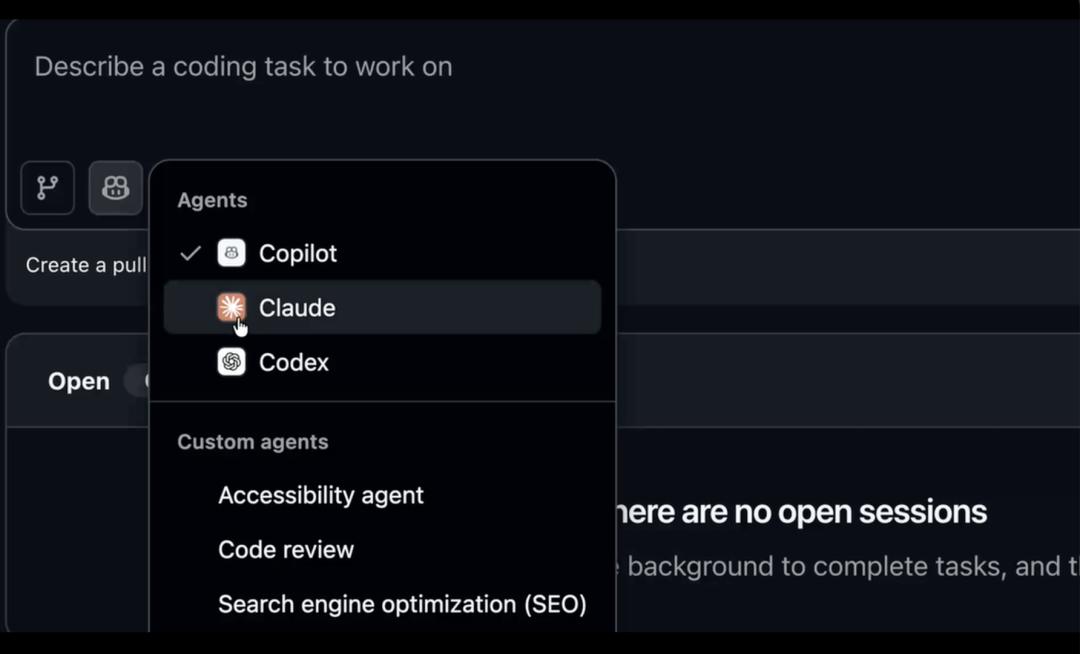
GitHub describes the agents as running asynchronously, enabling real-time tracking of progress and post-session reviews to understand what actions were taken and why.

Key Interfaces
Mapping Codex’s process to GitHub’s capabilities reveals four key interfaces:
- Finding Work: GitHub’s existing issues, PRs, and repository contexts, alongside third-party platforms like Algora and IssueHunt, provide structured opportunities for agents.
- Completing Tasks: With repository read/write permissions and Codespaces, agents can clone, modify, and test code without needing to set up infrastructure.
- Communication: PR review channels and comment threads allow agents to understand who is responding and which parts of the code are being discussed.
- Receiving Payment: Platforms like Algora and IssueHunt integrate with GitHub workflows, automating payment processes.
While these interfaces are not new, their combination in a single workspace tailored for agents changes their significance.

Beyond Codex
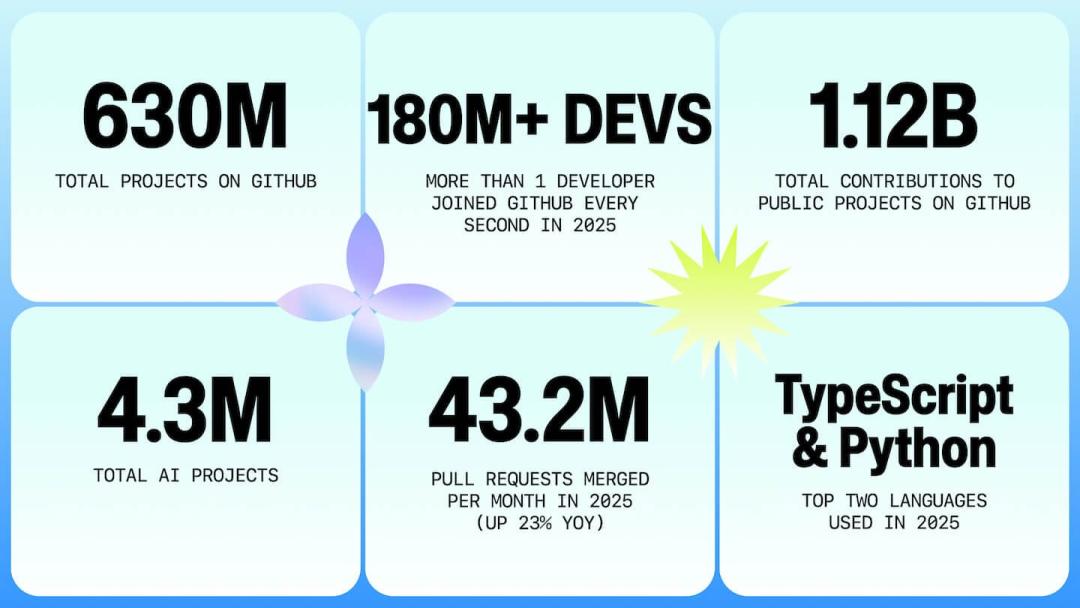
The pathway Codex navigated is reusable for any agent integrated into Agent HQ. GitHub’s Octoverse report predicts that by 2025, the platform will average 43.2 million PR merges monthly, with AI-related repositories increasing by 178%.
The development workflow driven by agents is transitioning from experimentation to scalability.
Final Thoughts
So, what remains for “AI earning autonomously” to become a reality? The bounty Codex completed was not of the highest difficulty, and the $16.88 payment corresponds to minor fixes with minimal back-and-forth from maintainers. This serves as a demonstration of a viable path rather than a mature one.
Human involvement is still significant; account setup and GitHub authorization require human configuration, and the final code review and merging need human confirmation. OpenAI emphasizes that users must manually review and verify all code generated by agents.
This means Chris’s role was crucial: he initiated the command, enabled payment channels, and provided support if Codex encountered issues. Thus, this event is more accurately described as an “end-to-end process completed under Chris’s supervision,” indicating that true autonomous earning is still a distance away.
However, the balance of collaboration between humans and agents is rapidly shifting towards the latter. OpenAI suggests that interactions with Codex will increasingly resemble asynchronous collaboration with colleagues, allowing agents to handle more complex tasks over time.
While $16.88 won’t change anyone’s life, if this experiment is validated, what might the next order look like?
Comments
Discussion is powered by Giscus (GitHub Discussions). Add
repo,repoID,category, andcategoryIDunder[params.comments.giscus]inhugo.tomlusing the values from the Giscus setup tool.